Generator vs Battery Backup: What’s Best During Power Outages?
The lights flicker, then die. A sudden, unsettling silence descends, broken only by the distant rumble of thunder or the wind howling outside. In those moments, the convenience of modern life grinds to a halt, leaving us vulnerable and anxious. Power outages, whether caused by severe weather, grid failures, or unexpected accidents, are an unwelcome reality for many. When the grid goes dark, the question on everyone's mind is: how do I keep my essential devices running? This is where the dilemma of choosing between a traditional generator and a modern battery backup system comes into play. Both offer a lifeline of power, but they do so in fundamentally different ways. This article will dive deep into the world of emergency generator vs battery systems, dissecting their mechanics, pros, cons, and ultimately, helping you determine which solution is the best fit for your specific needs during those critical power outage moments.
The Traditional Powerhouse: How Generators Work
Generators have long been the go-to solution for backup power. At their core, they are mechanical devices that convert mechanical energy into electrical energy. This is typically achieved through an engine that burns fuel, which in turn spins an alternator to produce electricity. While the concept is straightforward, the execution and application vary significantly, leading to different types of generators designed for distinct purposes.
Fueling the Fire: Types of Generators
When we talk about generators, it's crucial to distinguish between the two main categories: portable and standby. Each has its own set of advantages and disadvantages that directly impact their suitability for different scenarios.
Portable Generators: These are the workhorses of the portable power world. They are designed to be moved and used for specific tasks or to power a limited number of appliances.
* Pros: Their primary appeal lies in their affordability and portability. For a few hundred to a couple of thousand dollars, you can acquire a unit capable of powering essential items. They are generally easy to use, often requiring a simple pull-start mechanism and connection to your appliances via extension cords. * Cons: However, their convenience comes with drawbacks. Portable generators are notoriously noisy, often producing a significant decibel level that can be disruptive to neighbors. They also require fuel storage, which can be a safety concern and necessitates having a supply of gasoline, propane, or diesel on hand. Furthermore, they produce emissions, which means they must be operated outdoors and away from windows and doors to prevent carbon monoxide poisoning. Their limited power output means they are best suited for powering a few appliances, lights, and charging devices, rather than an entire household.
Standby Generators: In contrast to their portable counterparts, standby generators are permanently installed outside your home or business. They are designed to kick in automatically when the main power supply is interrupted.
* Pros: The biggest advantage of standby generators is their automatic operation. When the power goes out, they sense the disruption and start up within seconds, seamlessly switching your power supply. They offer higher power output, capable of running your entire home, including HVAC systems, refrigerators, and other high-demand appliances. Many modern standby units are also quieter than portable models and can be fueled by natural gas or propane, eliminating the need for frequent refueling. * Cons: The primary barrier to entry for standby generators is their higher cost. They represent a significant upfront investment, and their installation requires a professional to ensure proper connection to your home's electrical system and fuel source. Their reliance on a continuous fuel source (natural gas or propane) can also be a consideration during prolonged outages if those utility lines are affected.
The Engine of Backup: Fuel Sources and Their Implications
The type of fuel a generator uses has a direct impact on its performance, cost, and environmental footprint. Understanding these differences is key to making an informed decision when comparing emergency generator vs battery systems.
* Gasoline: This is the most common fuel for portable generators due to its widespread availability. However, gasoline can degrade over time, especially when stored for extended periods, leading to engine problems. It also has a higher flammability risk. * Propane: Propane burns cleaner than gasoline and has a longer shelf life, making it a more stable fuel for storage. However, it typically requires larger tanks, which can be cumbersome to store and connect. * Diesel: Diesel generators are known for their durability and efficiency, often offering longer runtimes and better fuel economy. They are a popular choice for larger, more robust backup power needs. However, diesel can be more expensive than gasoline and the engines can be noisier. * Natural Gas: This is the preferred fuel for many standby generators. Its primary advantage is convenience, as it's supplied directly from your utility line, eliminating the need for refueling. However, this also means that if the natural gas infrastructure is compromised during a widespread disaster, your generator will be rendered useless.
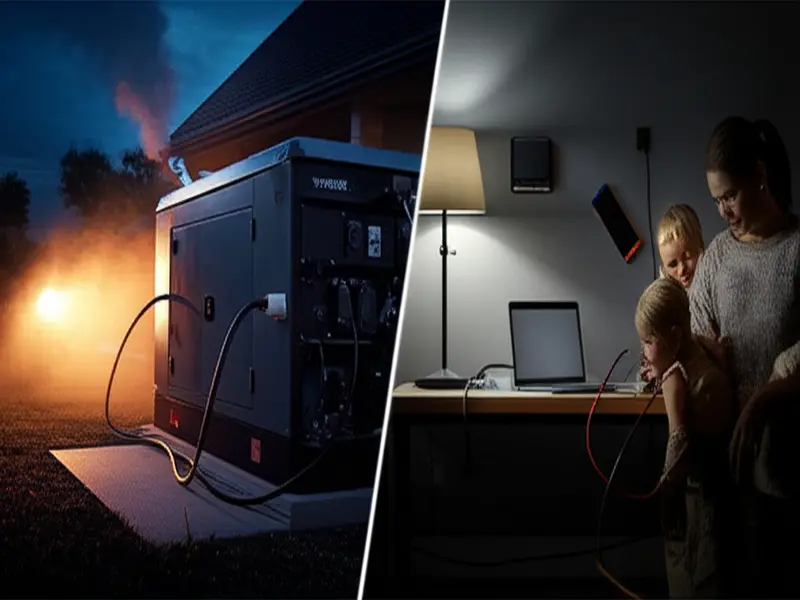
The Silent Guardian: Exploring Battery Backup Systems
In recent years, battery backup systems have emerged as a compelling alternative to traditional generators, offering a different approach to maintaining power during outages. These systems leverage advanced battery technology to store electricity, providing a clean, quiet, and often integrated solution for backup power needs.
Storing the Spark: How Battery Backup Works
At its core, a battery backup system is designed to store electrical energy when it's available and then release it when needed. This energy is typically sourced from the electrical grid when power is flowing normally, or from renewable sources like solar panels. The stored energy is in the form of direct current (DC). However, most household appliances run on alternating current (AC). This is where an inverter comes into play. The inverter within the battery system converts the stored DC power into usable AC power, allowing you to run your devices just as you would when connected to the grid.
Varieties of Voltage: Types of Battery Backup Systems
Similar to generators, battery backup systems come in various forms, each catering to different levels of power needs and portability.
Portable Power Stations: These are essentially large, rechargeable batteries housed in a portable unit, often resembling a suitcase or a toolbox.
* Pros: Their main selling points are their compact size, quiet operation, and ease of use. They are typically plug-and-play, requiring no complex installation. They also offer multiple charging options, allowing you to replenish their power from a wall outlet, a car's 12V socket, or even solar panels, making them incredibly versatile. * Cons: The primary limitation of portable power stations is their limited capacity. While they can power essential electronics, they are generally not designed to run high-demand appliances like air conditioners or electric stoves. They also often have longer recharge times compared to refueling a generator, and higher capacity models can be quite expensive. They are ideal for charging laptops, phones, running small medical devices, or powering a fan.
Whole-Home Battery Systems: These are more robust and integrated solutions, designed to provide backup power for an entire residence. Brands like Tesla Powerwall and LG Chem RESU are prominent examples.
* Pros: These systems boast high capacity, capable of powering all your essential appliances and even non-essential ones during an outage. They integrate seamlessly with solar panel systems, allowing you to store excess solar energy and use it when the sun isn't shining, significantly reducing your reliance on the grid. They offer automatic switching, ensuring a smooth transition during power outages, and operate silently with zero emissions, making them an environmentally friendly choice. * Cons: The most significant drawback is the significant upfront cost. These systems represent a substantial investment. They also require professional installation and often necessitate compatible inverters and potentially electrical panel upgrades, adding to the overall expense and complexity.
The Energy Equation: Battery Capacity and Power Output
Understanding the specifications of battery backup systems is crucial for selecting the right one. Two key metrics to consider are capacity and power output.
* Capacity: This refers to the total amount of energy a battery can store. It's typically measured in Watt-hours (Wh) or Kilowatt-hours (kWh). A higher Wh or kWh rating means the battery can provide power for a longer duration. For example, a 1000Wh battery can theoretically power a 100W device for 10 hours (1000Wh / 100W = 10h). * Power Output: This is measured in Watts (W) or Kilowatts (kW) and indicates the maximum amount of power the battery can deliver at any given moment. This is crucial for determining if the battery can handle the surge demand of certain appliances when they start up. For instance, a refrigerator might require 200W to run but surge to 800W when its compressor kicks in. You need a battery system that can handle this peak demand.
The Head-to-Head: Key Differences in Emergency Generator vs Battery Systems
Now that we've explored the individual components, let's put emergency generator vs battery systems head-to-head across several critical comparison points. This will help illuminate the distinct advantages and disadvantages of each technology.
Powering Up: Performance and Runtime
When the power goes out, the primary concern is how long your backup system can keep things running.
* Generators: Generators excel in providing continuous power output, limited only by the amount of fuel you have available. They are generally capable of handling high-demand appliances without issue. However, the practical runtime is directly tied to your ability to refuel. During prolonged outages, sourcing fuel can become a significant challenge. * Battery Systems: Battery systems are limited by their stored energy capacity. Once the battery is depleted, you'll need to recharge it. This makes them ideal for powering essential devices and moderate loads for a specific duration. Their runtime can be extended significantly if paired with solar panels, allowing for continuous replenishment. However, without solar, you're reliant on grid charging, which is obviously unavailable during an outage.
The Sound and the Fury: Noise Levels and Emissions
The environmental impact and the level of disruption caused by your backup power source are important considerations.
* Generators: Traditional generators are known for their noise. Portable units can be quite loud, and even standby generators produce a noticeable hum. They also produce exhaust fumes containing carbon monoxide and other pollutants, necessitating outdoor operation and careful placement to avoid health hazards. * Battery Systems: In stark contrast, battery backup systems offer silent operation. There are no engines to run and no exhaust to produce. This makes them ideal for use in noise-sensitive areas or for individuals who prefer a quieter backup solution. They also produce zero emissions, contributing to a cleaner environment.
The Cost Factor: Upfront Investment vs. Long-Term Expenses
Budget is often a deciding factor, and the cost structures of generators and battery systems differ significantly.
* Generators: Portable generators generally have a lower initial cost, making them more accessible for many homeowners. Standby generators, however, represent a substantial higher upfront investment. The ongoing expenses for generators primarily come from the cost of fuel, which can fluctuate, and regular maintenance to keep the engine in good working order. * Battery Systems: Battery backup systems, especially whole-home solutions, have a higher upfront cost. This is a significant barrier for some consumers. However, their ongoing costs are minimal, particularly if they are integrated with solar power. If relying on grid charging, the cost is simply the electricity used. A potential long-term expense to consider is battery degradation over time, which may necessitate eventual replacement.
Installation and Maintenance: What's Involved?
The complexity of setting up and maintaining your backup power solution can influence your decision.
* Generators: Portable generators are typically easy to set up, often requiring a DIY approach for basic use. Standby generators, on the other hand, demand professional installation to ensure safe and correct integration with your home's electrical system and fuel lines. They also require regular maintenance checks, including oil changes, filter replacements, and testing, to ensure reliability. Fuel management is also a key aspect of generator maintenance. * Battery Systems: Portable power stations are essentially plug-and-play devices, requiring no installation. Whole-home battery systems require professional installation, which can involve electrical work and integration with your existing solar setup or home wiring. However, once installed, they generally require minimal maintenance, often just software updates or occasional checks by a technician.
Environmental Impact and Sustainability
In today's world, the environmental footprint of our choices is increasingly important.
* Generators: The reliance on fossil fuels for generators means they contribute to greenhouse gas emissions and air pollution. This is a significant concern for environmentally conscious consumers. * Battery Systems: Battery backup systems are inherently cleaner, especially when paired with renewable energy sources like solar. They produce no direct emissions during operation. However, the manufacturing of batteries and their eventual disposal or recycling are environmental considerations that are being addressed by the industry.
Safety Considerations
Safety is paramount when dealing with any power source.
* Generators: The primary safety concerns with generators revolve around carbon monoxide poisoning due to exhaust fumes and fire hazards associated with storing and handling flammable fuels. Proper ventilation, safe operating procedures, and the use of carbon monoxide detectors are absolutely essential. * Battery Systems: Battery systems are generally considered safer in terms of emissions and fire risk associated with fuel. However, as with any electrical system, proper installation and maintenance are crucial to prevent electrical hazards.
Making the Right Choice: Scenarios for Generators vs. Battery Backup
The "best" solution for backup power isn't a one-size-fits-all answer. It truly depends on your individual circumstances, priorities, and the types of power outages you are most likely to experience. Let's explore some practical scenarios:
For the Prepared Homeowner: Powering Essentials During Short Outages
If you live in an area prone to frequent but typically short power outages, such as those caused by thunderstorms, your needs might be relatively modest. You want to keep your refrigerator running to prevent food spoilage, charge your essential communication devices, and have some lighting.
* Recommendation: In this scenario, a portable generator could be a cost-effective solution. It can power your critical appliances via extension cords. Alternatively, a smaller portable power station could also suffice for charging electronics and running a fan or a few lights, offering a quieter and emission-free option for essential needs.
For the Off-Grid Enthusiast or Solar-Powered Home: Maximizing Renewable Energy
If you're committed to renewable energy, perhaps with a significant solar panel installation, your goal is to maximize self-sufficiency and store excess energy for times when solar generation is low.
* Recommendation: A whole-home battery system is the ideal choice here. It allows you to store the solar energy generated during the day and use it at night or during cloudy periods, significantly reducing your reliance on the grid and providing seamless backup power when needed.
For the Business Owner: Keeping Operations Running
For businesses, continuity is key. Even a short power interruption can lead to significant financial losses, data loss, or disruption of services.
* Recommendation: The choice here depends on the criticality of the operations. For businesses that require substantial power for machinery, servers, or entire facilities, a standby generator is often the most practical solution due to its high power output and continuous runtime capabilities. For businesses with specific critical equipment that needs uninterrupted power, a robust battery backup system designed for those specific loads might be a more targeted and quieter solution.
For the Medical Needs Household: Uninterrupted Power for Life Support
Individuals who rely on medical devices that require a constant and uninterrupted power supply face the most critical need for backup power.
* Recommendation: In such cases, redundancy and absolute reliability are paramount. A reliable standby generator with a sufficient fuel supply is a strong option. Alternatively, a high-capacity, dedicated battery backup system with advanced monitoring and alert features can provide a silent and immediate power source. It's often advisable to have both a generator and a battery system for maximum security. Consulting with medical equipment providers and electrical professionals is crucial to ensure the chosen system meets all safety and operational requirements.
Budget-Conscious Solutions: Balancing Cost and Coverage
For those with a limited budget, the goal is to find the most effective backup power solution without breaking the bank.
* Recommendation: Starting with a portable power station is an excellent entry point. It provides the ability to charge essential electronics and power small appliances, offering a tangible benefit during outages without a massive upfront cost. As budgets allow, one could then consider a larger portable generator for more substantial appliance coverage or eventually invest in a whole-home system.
The Evolving Landscape: What's Next for Backup Power?
The world of backup power is not static. Technology is constantly advancing, and we can expect exciting developments in the coming years that will further enhance the capabilities and accessibility of both generators and battery systems.
Integration with Smart Grids and Home Automation
Battery backup systems are becoming increasingly intelligent. They are being designed to communicate with smart grids, allowing them to participate in grid services, potentially earning revenue for homeowners. Furthermore, their integration with home automation systems means they can be controlled and monitored remotely, offering greater convenience and control.
Advancements in Battery Technology
Researchers are continuously working on improving battery technology. We can anticipate batteries with faster charging times, longer lifespans, and increased energy density, meaning more power can be stored in smaller, lighter units. Solid-state batteries are a promising area of development that could revolutionize energy storage.
The Role of Renewable Energy in Backup Power
The synergy between renewable energy sources and backup power is only going to grow. As solar and wind power become more prevalent, battery storage will play an even more critical role in ensuring a stable and reliable power supply, both for individual homes and for the broader grid.
Conclusion
Navigating the choice between an emergency generator vs battery systems can seem daunting, but by understanding their fundamental differences, you can make an informed decision that best suits your needs. Generators offer raw power and extended runtime, limited only by fuel availability, but come with noise and emissions. Battery backup systems provide silent, clean power and seamless integration, particularly with renewables, but are constrained by their stored capacity and higher upfront cost.
Ultimately, the "best" solution is a personal one. Carefully assess your power requirements, consider your budget, and weigh the pros and cons discussed in this article. Do you need to power a few essential devices for a few hours, or do you require continuous power for your entire home? Are you looking for a quiet, eco-friendly solution, or do you prioritize raw power output?
If you're still pondering the best generator for your emergency needs, you might find this guide helpful: Best Generators for Emergency.
We encourage you to share your thoughts and experiences with power outages and backup solutions in the comments below! What challenges have you faced, and what solutions have worked best for you? If you're considering a specific backup power system, remember to consult with qualified professionals to ensure the most effective and safest installation for your home. Preparedness is key, and choosing the right backup power solution is a significant step towards ensuring peace of mind during any power outage.
Comments
Post a Comment